
Wired vs Wireless Gaming Gear: Is There Still a Difference in 2026?
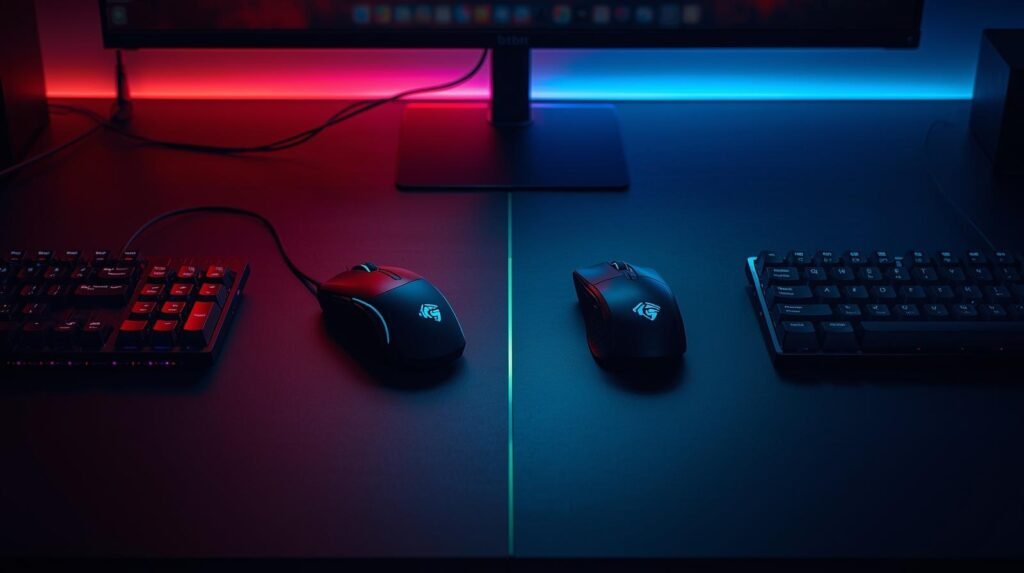
For many years, wired gaming peripherals were considered the clear choice for serious players. Competitive gamers favored wired mice, keyboards, and headsets because they provided stable connections and extremely low input latency. Early wireless devices often struggled with input lag, signal interference, and limited battery life, making them difficult to rely on in fast-paced games.
Wireless technology, however, has improved significantly over the past decade. Modern gaming peripherals often use optimized 2.4 GHz wireless receivers, improved Bluetooth standards, and refined firmware to reduce latency and improve reliability. As a result, many wireless gaming devices now perform much closer to their wired counterparts than they did in the past.
Because of these improvements, many gamers now question whether wired gear still offers a meaningful advantage. In some situations, the difference may be minimal, while in others it can still matter. This article examines the real differences between wired and wireless gaming gear in 2026, focusing on latency, reliability, battery considerations, and how different types of players may benefit from each option.
For a broader comparison of peripherals and gaming hardware, see our Gaming Gear rankings and buying guides covering keyboards, mice, controllers, headsets, and other competitive gaming accessories.
How Wired Gaming Gear Works
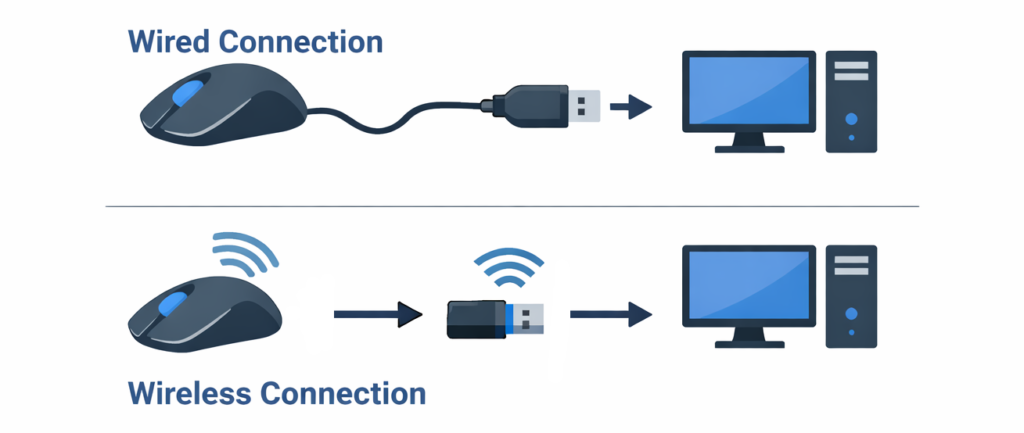
Wired gaming peripherals connect directly to a computer or console through a physical cable, typically using a USB interface. This direct connection allows the device to transmit input signals without relying on wireless communication protocols.
A wired device receives constant power through the cable, which eliminates the need for batteries. This also allows the device to operate continuously without interruption from charging requirements or power limitations.
Because the connection is physical, data transmission is generally stable and predictable. There is no reliance on radio frequencies, which means the signal is not affected by wireless interference from nearby devices or networks.
Historically, this reliability made wired gear the preferred option for competitive gaming. Players could expect consistent response times and minimal input delay during gameplay.
Most wired gaming peripherals operate at a 1000Hz polling rate, meaning the device reports its input to the system 1000 times per second. Some newer peripherals have increased polling rates, reaching 4000Hz or even 8000Hz, which further reduces input delay in theory.
These characteristics—stable connections, predictable latency, and uninterrupted power—are the primary reasons wired peripherals became the long-standing standard for competitive gaming setups.
How Modern Wireless Gaming Gear Works
Modern wireless gaming peripherals rely on radio-frequency communication rather than a direct cable connection. Most gaming-focused devices use a 2.4 GHz proprietary wireless connection, which communicates with the computer through a small USB receiver.
This type of wireless system differs from traditional Bluetooth in several ways. Gaming peripherals using proprietary 2.4 GHz wireless protocols are specifically designed to minimize latency and improve reliability.
Bluetooth connections are also available on many devices, particularly for compatibility with laptops, tablets, and mobile devices. However, Bluetooth generally introduces slightly higher latency compared to dedicated gaming wireless receivers.
Wireless peripherals have improved dramatically due to several technological developments. Manufacturers now use optimized wireless protocols, faster internal processors, and refined firmware to ensure faster communication between the device and the system.
Many wireless gaming devices now support polling rates similar to wired peripherals, including 1000Hz and higher in some cases. These improvements have narrowed the performance gap significantly.
As a result, the latency difference between wired and modern wireless gaming gear is often much smaller than it was in earlier generations of peripherals.
Latency Differences (The Most Important Factor)
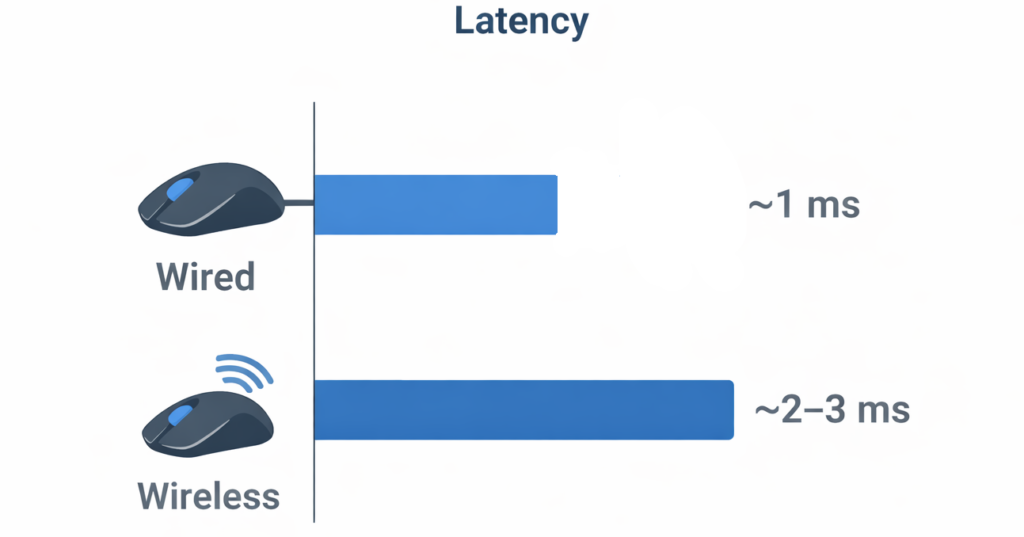
Latency refers to the delay between a player’s physical input and the moment that input is registered by the computer or console. In gaming, even small delays can affect responsiveness, particularly in fast-paced competitive titles.
With wired peripherals, latency is typically extremely low and highly consistent. Because the signal travels through a direct cable connection, the communication path is simple and predictable.
Wireless peripherals introduce an additional step in the communication process. The device must transmit input data over radio frequency to a receiver, which then passes the information to the system. Historically, this extra step introduced noticeable delays.
Modern wireless gaming devices have reduced this delay considerably. Many current wireless mice and keyboards operate within 1–2 milliseconds of wired devices, depending on the specific hardware and configuration.
In many real-world gaming scenarios, this difference is technically measurable but not always perceptible to the average player. Competitive players who rely on extremely precise timing may still prefer the consistency of wired connections, but many players find that modern wireless devices perform similarly in practice.
Several factors influence overall latency, including polling rate, device firmware optimization, USB controller behavior, and the wireless protocol used by the device. Because of these variables, performance can differ between individual products even within the same category.
Movement behavior is also affected by sensitivity settings, which is why understanding how DPI works can help clarify how input translates to on-screen movement.
Battery Life and Power Trade-Offs
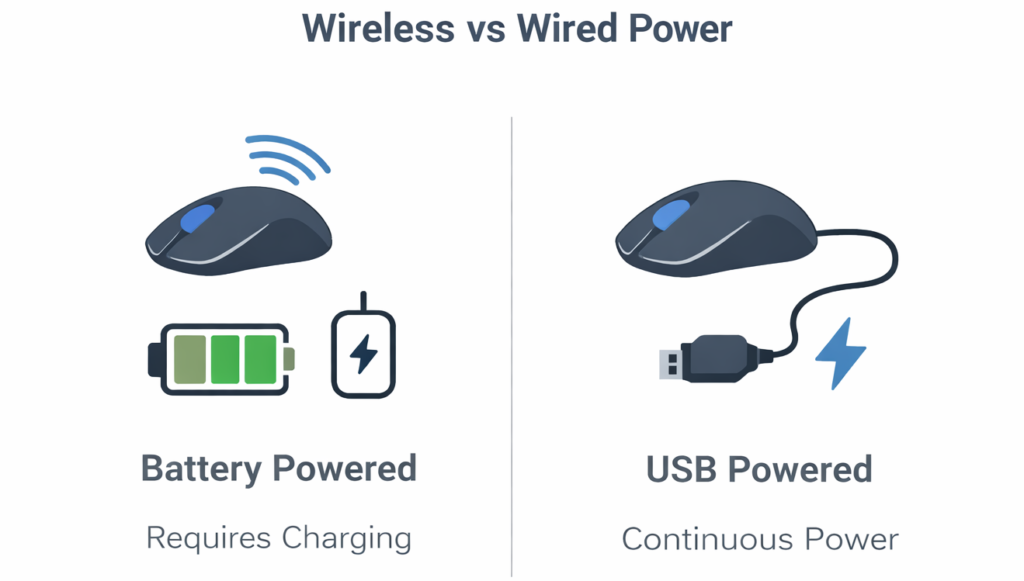
One of the most obvious differences between wired and wireless gaming peripherals involves power management.
Wireless devices rely on internal batteries, which must be recharged periodically. Depending on the device and usage patterns, battery life may range from several dozen hours to over 100 hours on a single charge.
Although battery technology has improved significantly, it still introduces a layer of maintenance that wired devices do not require. Users must remember to charge their peripherals, and battery capacity can gradually decline over time.
There is also the possibility that a device may run out of power during extended gaming sessions if it is not charged regularly.
Wired devices do not have these limitations. Because they draw power directly from the connected system, they can operate indefinitely without interruption.
Modern wireless peripherals attempt to address these concerns through longer battery life, faster charging technologies, and USB-C connections. Some devices also support play-while-charging functionality, allowing the peripheral to operate as a wired device while connected to a charging cable.
These improvements have reduced the inconvenience of wireless power management, but they do not eliminate it entirely.
Reliability and Signal Stability
Connection reliability is another factor that historically favored wired peripherals.
Because wired devices rely on a physical cable, they are largely unaffected by environmental factors. The connection remains stable as long as the cable and port are functioning correctly.
Wireless peripherals rely on radio frequency communication, which can be influenced by external factors. Potential sources of interference include nearby WiFi networks, other wireless devices, and crowded radio-frequency environments.
Signal obstruction can also occur if the receiver is placed far from the device or blocked by physical objects.
However, modern wireless gaming peripherals have made significant improvements in this area. Optimized receivers, adaptive frequency management, and stronger wireless protocols help reduce the likelihood of connection instability.
In most modern setups, wireless reliability is generally strong, particularly when the receiver is positioned close to the device.
Competitive Gaming vs Casual Gaming
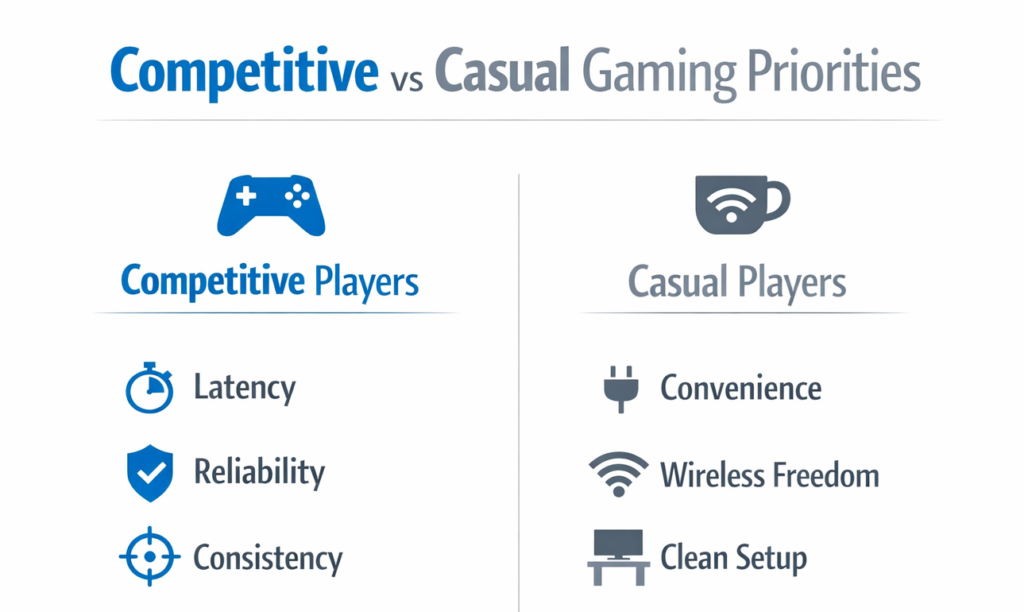
The importance of wired versus wireless gear can vary depending on the type of player.
In competitive gaming environments, consistency and predictability are often the highest priorities. Professional esports tournaments frequently standardize equipment configurations to ensure fairness and minimize potential issues.
Because of this, wired peripherals are still commonly used in tournament settings. A wired connection eliminates potential wireless interference and removes the need to monitor battery levels.
For casual players, the priorities are often different. Many players prefer the convenience of wireless peripherals because they reduce cable clutter and allow more flexibility in desk setup.
Wireless mice, keyboards, and headsets can create a cleaner workspace and provide more freedom of movement.
Interestingly, many professional players have begun using wireless mice in recent years. This shift reflects how much wireless technology has improved, particularly in terms of latency and reliability.
Device-Specific Differences
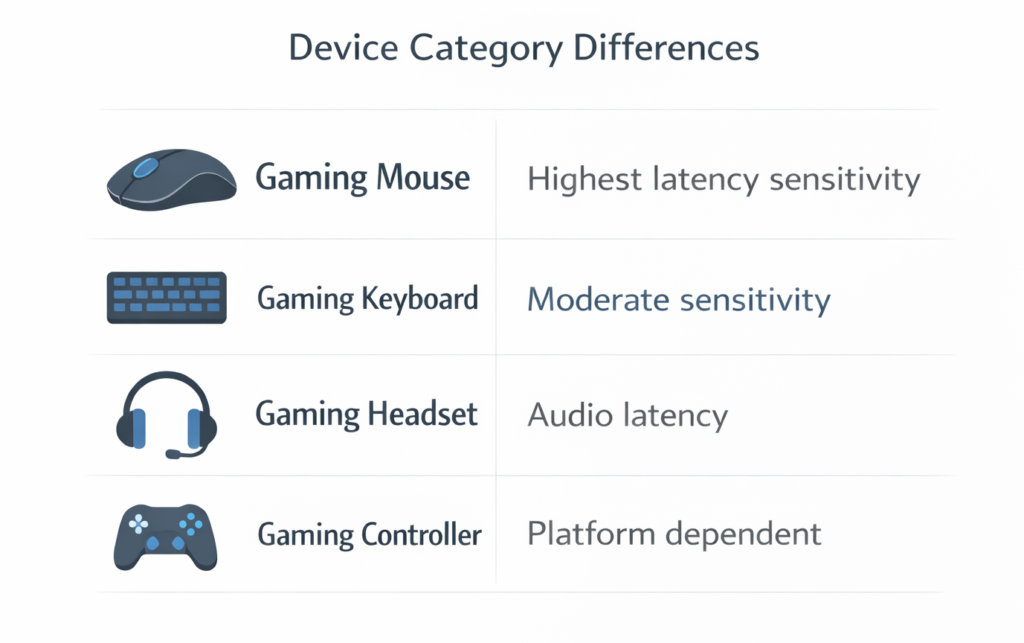
The wired versus wireless debate can vary depending on the type of gaming device.
Gaming Mice
Wireless technology has improved most dramatically in gaming mice. Many modern wireless models now offer latency performance comparable to wired alternatives. Many modern wireless mice offer latency performance comparable to wired models. Many of the top-performing options in this category are now ultralight designs, combining low weight with strong wireless performance—our Top 10 Lightweight Gaming Mice compares the best options available.
Advances in sensor technology, lightweight designs, and extended battery life have made wireless mice increasingly popular among both casual and competitive players.
Because mice rely heavily on rapid and precise input, this category has received the most engineering attention from manufacturers.
If you’re comparing different mouse features and trying to decide what actually matters, understanding how to choose a gaming mouse helps put these differences into context.
Gaming Keyboards
Gaming keyboards generally tolerate slightly higher input latency compared to mice, because individual keystrokes are less sensitive to small timing differences.
Wired keyboards remain common in gaming setups due to their simplicity and reliability. However, wireless keyboards are becoming more popular for users who prioritize clean desk setups and flexible workspace layouts.
The type of keyboard itself also influences feel and noise, which is why understanding the differences between mechanical vs membrane keyboards can help you choose the right setup.
Gaming Headsets
For gaming headsets, latency primarily affects audio synchronization rather than direct input response.
Wireless gaming headsets often rely on 2.4 GHz receivers to maintain low audio latency. Bluetooth headsets can introduce more noticeable delays, which may affect gameplay in certain situations.
Because of this, dedicated wireless gaming headsets typically use proprietary wireless connections rather than Bluetooth. To better understand how audio quality, comfort, and latency all come together, it helps to know what makes a good gaming headset when evaluating different options.
Gaming Controllers
Gaming controllers are widely used across both PC and console gaming, with players choosing between wired and wireless models depending on their setup and preferences. Wireless controllers are already the standard for most modern consoles. Systems such as PlayStation and Xbox have used wireless controllers for multiple generations.
Latency differences between wired and wireless controllers vary depending on the platform and connection method. In some competitive gaming environments, wired controllers are still used to ensure consistent performance.
Wireless Standards in 2026
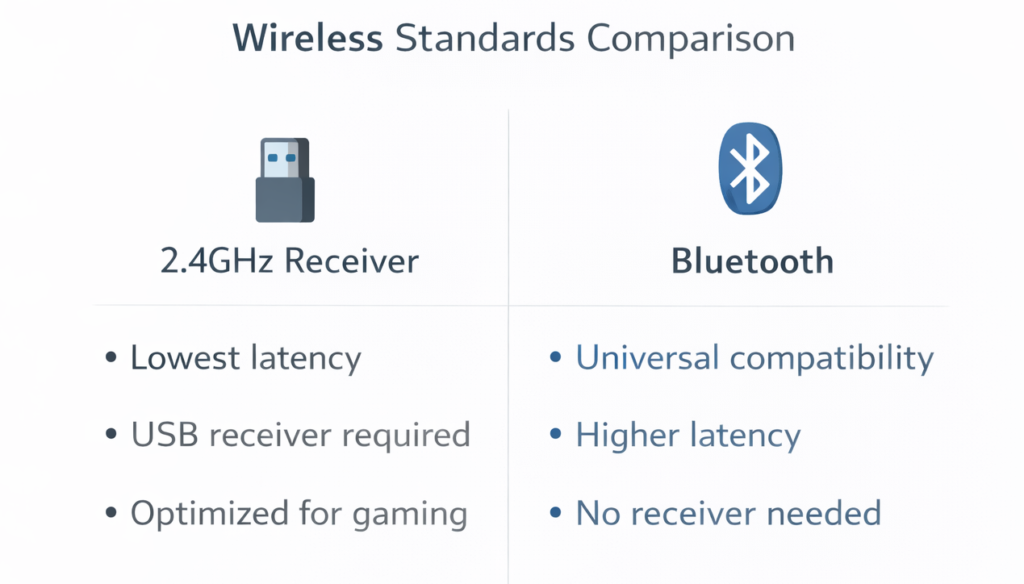
Most gaming peripherals rely on one of two wireless connection types.
2.4 GHz proprietary wireless is the most common option for gaming gear. These connections use a dedicated USB receiver and are optimized for low latency and stable communication.
Because the receiver communicates directly with the device, these systems typically offer faster response times than general-purpose wireless standards.
Bluetooth, on the other hand, prioritizes compatibility. It allows peripherals to connect to a wide range of devices without requiring a dedicated receiver.
However, Bluetooth typically introduces slightly higher latency compared to proprietary gaming wireless protocols. For this reason, many gaming peripherals include both options but recommend using the 2.4 GHz receiver when available.
When Wired Still Makes More Sense
Despite improvements in wireless technology, there are still situations where wired peripherals remain the better option.
Competitive esports environments often prioritize wired devices because they provide maximum consistency and eliminate potential wireless issues.
Players who want the lowest possible latency may also prefer wired peripherals, particularly for high-level competitive play.
Wired gear can also make sense for users who prefer not to manage battery charging or who want a simple, maintenance-free setup.
Budget peripherals are another category where wired devices are still common. Wired designs often reduce manufacturing costs while maintaining reliable performance.
When Wireless Makes More Sense
Wireless peripherals offer advantages in situations where flexibility and convenience are more important than absolute consistency.
For many users, the biggest advantage is a cleaner desk setup with fewer cables. This can improve workspace organization and reduce clutter.
Wireless gear is also helpful for gaming in non-traditional setups, such as couch gaming or living room environments where the player sits farther from the system.
Portability is another benefit. Wireless peripherals are often easier to transport and use across multiple devices.
Because modern wireless mice and other peripherals now perform close to wired devices, many players find that the convenience outweighs the small performance differences.
The Gap Between Wired and Wireless in 2026
The performance gap between wired and wireless gaming gear has narrowed significantly over the past decade.
Modern wireless peripherals often deliver latency performance that is very close to wired devices, especially when using optimized 2.4 GHz wireless connections.
For many players, this means that wireless gear is now a viable option without major compromises.
However, wired devices still offer the most predictable and consistent performance because they eliminate the additional communication step required for wireless transmission.
As a result, the choice between wired and wireless peripherals increasingly depends on personal priorities rather than fundamental technological limitations.
Wired vs Wireless Gaming Gear (Quick Comparison)
| Feature | Wired | Wireless |
|---|---|---|
| Latency | Lowest | Slightly higher |
| Reliability | Very stable | Generally stable |
| Battery | Not required | Requires charging |
| Mobility | Limited | High |
| Competitive use | Common | Increasing |
Final Verdict
In 2026, the difference between wired and wireless gaming gear is smaller than it once was.
Wired peripherals still provide the most consistent connection and remove concerns about battery management or wireless interference. For competitive environments where reliability and predictability are critical, wired devices remain a practical choice.
Modern wireless peripherals, however, have reached a point where their performance is very close to wired alternatives. Improvements in wireless protocols, polling rates, and battery technology have made them suitable for a wide range of gaming setups.
The best choice ultimately depends on the type of device, the player’s priorities, and the gaming environment. Competitive players may still prefer wired peripherals for maximum consistency, while many casual and enthusiast gamers may value the flexibility and convenience that wireless gear provides.
Understanding these trade-offs allows players to choose the option that best fits their gaming style and setup.