
What Makes a Good Gaming Headset?
Why Gaming Headsets Are Different
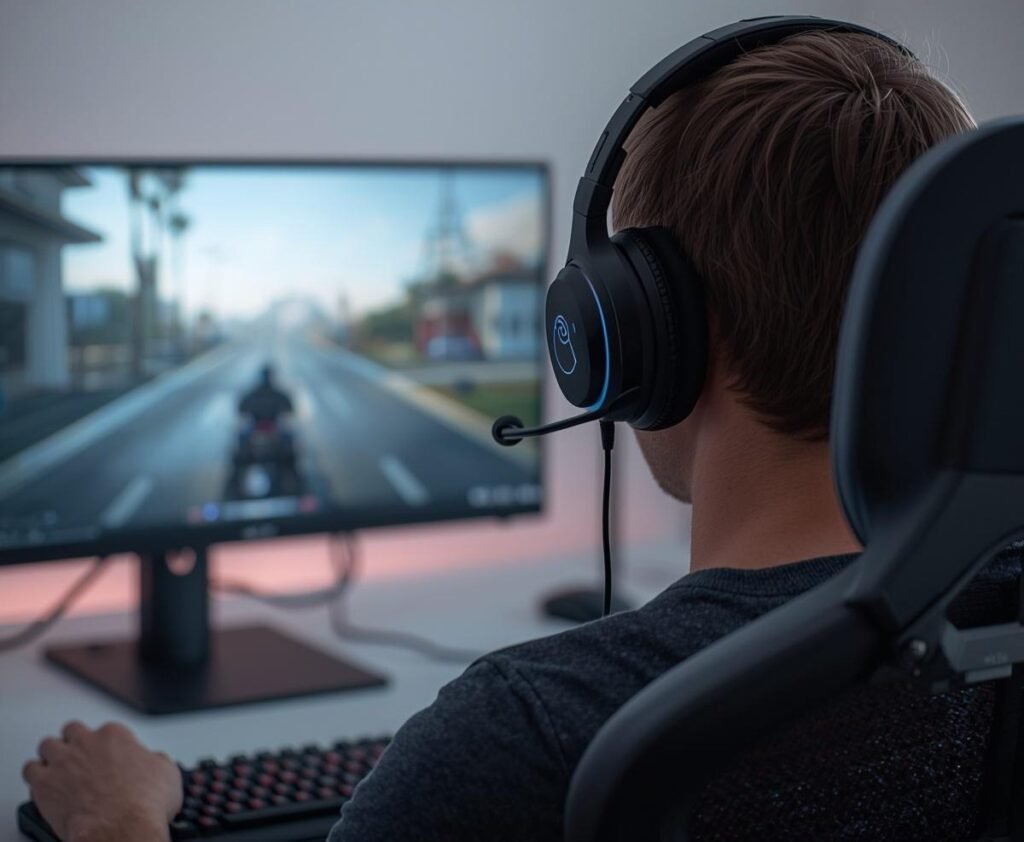
A gaming headset does more than just play sound. In many games, audio directly affects performance, communication, and overall experience. Footsteps, directional cues, and team coordination all rely on how clearly and accurately you hear what’s happening.
Unlike music or casual listening, gaming audio is interactive. Timing and positioning matter just as much as sound quality. That’s why the definition of a “good” gaming headset is different from standard headphones.
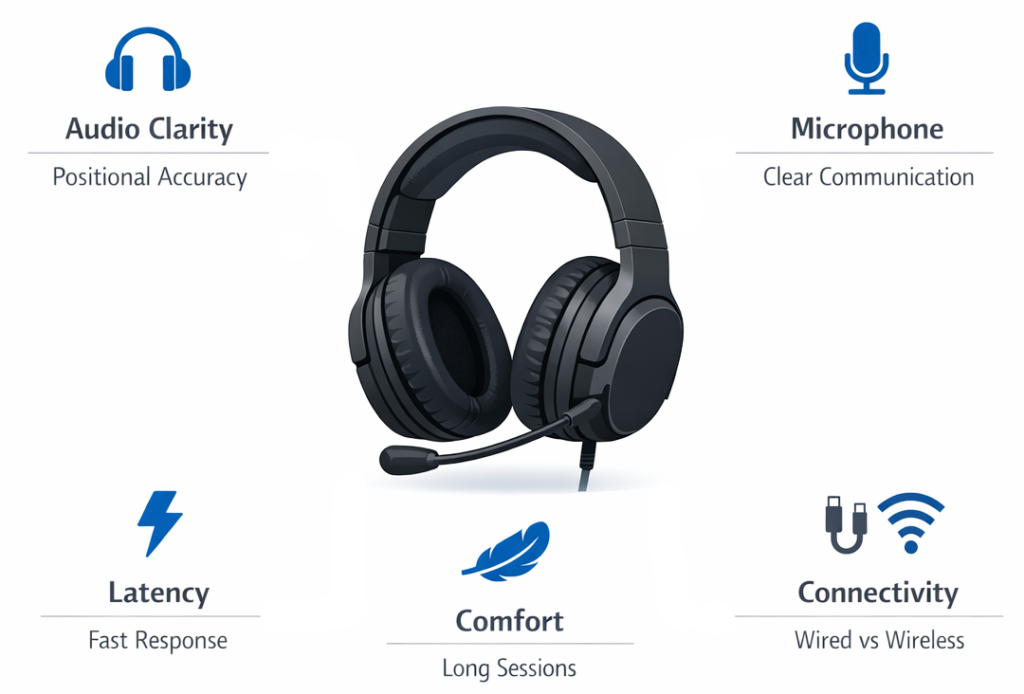
At a high level, most quality gaming headsets balance three key areas:
- Audio clarity and positioning
- Reliable communication
- Long-session comfort
What matters most depends on how you play. Competitive players prioritize precision, while casual players may value immersion and convenience more.
This guide breaks down what actually matters—without relying on marketing claims or unnecessary specs.
For a broader comparison of peripherals and gaming hardware, see our Gaming Gear rankings and buying guides covering keyboards, mice, controllers, headsets, and other competitive gaming accessories.
What Is a Gaming Headset (and How Is It Different From Regular Headphones)?
A gaming headset is designed specifically for interactive audio and communication. While standard headphones focus primarily on sound reproduction, gaming headsets combine audio output with an integrated microphone and gaming-focused tuning.
The biggest difference comes down to how they’re used. Gaming is not passive. You’re reacting to audio in real time, often while communicating with others. This makes factors like latency, positional accuracy, and mic clarity far more important than they would be for music or video.
Many gamers also choose headsets for convenience. While a separate pair of headphones and a standalone microphone can offer higher overall quality, a headset provides a simpler, more consistent setup with fewer points of failure.
In practice, a good gaming headset prioritizes reliability, clarity, and ease of use over raw audio performance alone.
What Audio Features Matter Most for Gaming?
What Makes Game Audio Clear and Positional?
The most important aspect of gaming audio is positional awareness. This is your ability to identify where sounds are coming from—whether it’s footsteps behind you or movement above or below your position.
This depends on imaging and sound separation, not just volume or bass. A headset that emphasizes clarity in the mid and high frequencies will often perform better in competitive scenarios than one that focuses on deep bass or cinematic sound.
In other words, accurate audio is more valuable than powerful audio.
Does Sound Tuning Matter More Than Sound Quality?
“Sound quality” can mean different things depending on context. In gaming, tuning often matters more than technical accuracy.
Many gaming headsets are tuned to highlight specific frequencies—especially those associated with footsteps, gunfire, and movement. This makes them more effective for gameplay, even if they aren’t as balanced as studio headphones.
For single-player or story-driven games, a more immersive sound profile may be preferable. For competitive play, clarity and detail tend to matter more.
Stereo vs Surround Sound for Gaming
Stereo audio uses two channels (left and right), while surround sound attempts to simulate multiple directions.
Virtual surround sound can enhance immersion, especially in cinematic games. However, it can sometimes reduce precision by altering how sounds are processed.
For competitive gaming, many players prefer stereo because it offers more consistent and accurate directional cues. Surround sound can still be useful, but it’s not required—and in some cases, it can be a disadvantage.
Open Back vs Closed Back Headsets
Open-back and closed-back designs affect how sound behaves.
- Open-back headsets allow air and sound to pass through the earcups. This creates a wider soundstage and can improve positional awareness.
- Closed-back headsets isolate sound, blocking external noise and keeping audio contained.
Open-back designs are often better for quiet environments and competitive play. Closed-back headsets are more practical in shared or noisy spaces.
How Important Is the Microphone on a Gaming Headset?
Microphone quality is often overlooked, but it plays a critical role in multiplayer gaming.
A good microphone should provide:
- Clear voice transmission
- Consistent volume
- Effective background noise reduction
- Minimal distortion
Features like detachable or retractable mics can improve flexibility, but clarity matters more than design.
In team-based games, poor communication can directly impact performance. Even if the audio is excellent, a weak microphone can limit the overall effectiveness of a headset.
Wired vs Wireless — Which Is Better for Gaming?
Does Wireless Add Latency?
Latency refers to the delay between an in-game event and when you hear it. In fast-paced games, even small delays can affect timing and reaction.
Modern 2.4 GHz wireless headsets have significantly reduced latency and are often suitable for most gaming scenarios. Bluetooth, however, typically introduces more delay and is not ideal for competitive gaming.
If you want a deeper breakdown, this is explained in Wired vs Wireless Gaming Gear.
When Wireless Headsets Actually Make Sense
Wireless headsets are often preferred for convenience. They allow more freedom of movement and reduce cable clutter.
They work especially well for:
- Console gaming
- Couch setups
- Casual or single-player games
For competitive play, wired connections still offer the most consistent performance.
Reliability & Battery Considerations
Wireless headsets rely on battery life and signal stability. While modern options are reliable, they still introduce potential limitations compared to wired setups.
Wired headsets don’t require charging and provide a constant connection, which can be important during long sessions or competitive play.
Comfort & Build Quality — Why Fit Matters More Than Specs
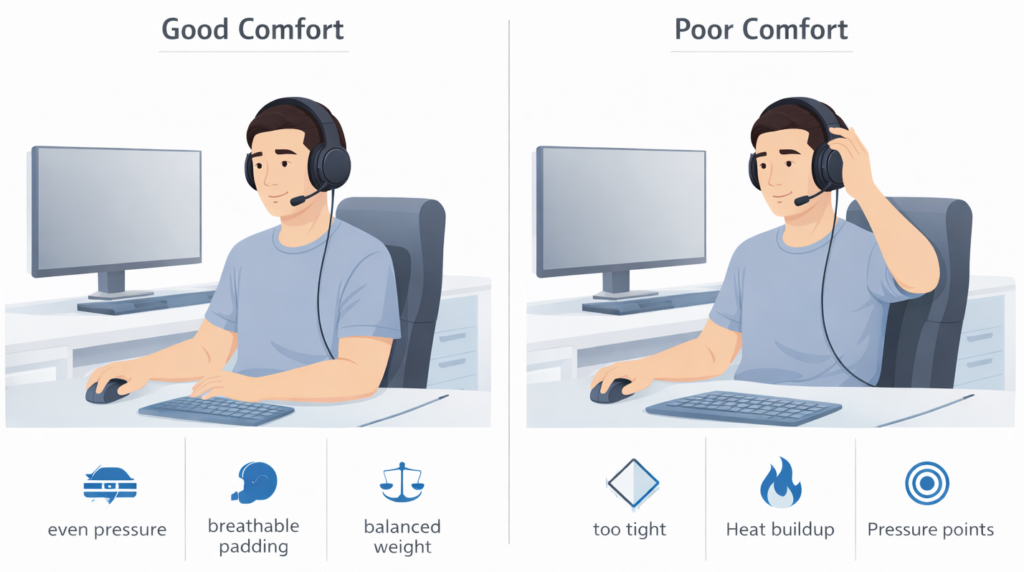
Comfort is one of the most important—and most underestimated—factors in a gaming headset.
Even the best audio performance becomes irrelevant if a headset is uncomfortable after an hour.
Key comfort factors include:
- Clamp force (how tightly the headset fits)
- Ear cup depth and shape
- Padding materials
- Weight distribution
Breathable materials can help during long sessions, while heavier headsets may cause fatigue over time.
Platform Compatibility — PC, Console, and Mobile
Not all gaming headsets work equally well across every platform.
Common connection types include:
- 3.5mm (universal compatibility)
- USB (often required for full features on PC)
- Wireless dongles
Some consoles have limitations on audio or chat functionality depending on how the headset connects. Marketing claims around “universal compatibility” can be misleading, so it’s important to match your headset to your primary platform.
Common Myths About Gaming Headsets
There are several misconceptions around gaming headsets:
- “Gaming headsets are just marketing hype”
While some products rely on branding, many are tuned specifically for gaming use cases. - “Surround sound is required”
Stereo is often preferred for competitive accuracy. - “More drivers means better sound”
Sound quality depends more on tuning than driver count. - “Wireless is always worse”
Modern wireless headsets can perform very well, depending on the technology used.
How to Choose the Right Gaming Headset for Your Needs
Choosing the right headset depends on how and where you play.
Consider:
- Competitive vs casual gaming
- Multiplayer vs single-player focus
- Desk setup vs couch gaming
- Long-term comfort vs short sessions
Your headset is part of a larger system. Performance is influenced by multiple factors, not just audio. If you want a broader perspective, understanding What Actually Improves Gaming Performance can help put headset choice into context.
So… What Actually Makes a Gaming Headset “Good”?
A good gaming headset isn’t defined by a single feature or spec.
It comes down to how well it delivers:
- Clear, accurate positional audio
- A reliable and natural-sounding microphone
- Minimal latency
- Long-term comfort
- Compatibility with your platform
Most importantly, it should match how you play.
If you’re ready to compare actual options, you can explore current picks in Best Gaming Headsets, where these factors are applied in real-world scenarios.
FAQ
Are gaming headsets worth it?
Yes, especially for multiplayer gaming. The combination of audio positioning and integrated communication makes them more practical than standard headphones.
Is surround sound necessary for competitive gaming?
No. Many competitive players prefer stereo for better accuracy and consistency.
Can budget gaming headsets still be good?
Yes. Many affordable options provide strong performance in key areas like clarity and comfort.
Is a separate mic better than a headset mic?
In terms of pure quality, yes. However, headsets offer convenience and simplicity that works well for most gamers.