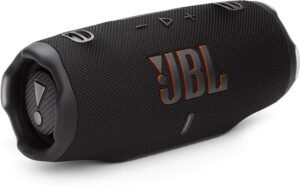
Top 10 Outdoor Bluetooth Speakers in 2026
Top 10 Outdoor Bluetooth Speakers in 2026 Read More »
At TechGearTopTen, we compare and rank today’s audio gear using real‑world performance data, usability, and overall value — not marketing claims.
From portable Bluetooth speakers to powerful stationary home audio systems, the right setup can dramatically improve how you enjoy music, podcasts, movies, and gaming. This category focuses on practical audio gear designed for everyday listening environments.
If you’re new to wireless audio technology, you may also want to read our guide on how to choose the right Bluetooth speaker.
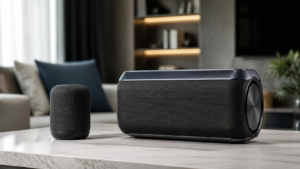
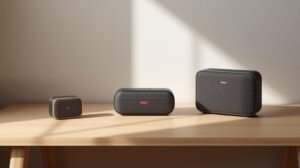
Modern audio gadgets vary widely in size, power output, and intended use. Portable Bluetooth speakers prioritize battery life, waterproof durability, and compact design for travel or outdoor listening. Larger stationary speakers typically focus on deeper bass response, wider soundstage, and higher maximum volume.
Sound performance depends on more than advertised wattage. Factors such as driver size, cabinet design, amplifier tuning, and digital signal processing all influence how a speaker actually sounds. Our guide to what actually affects speaker sound quality takes a deeper look at how these factors work together.
If you’re comparing power ratings, our Bluetooth speaker wattage explained guide breaks down RMS power, peak wattage, decibel levels, and how much power you actually need.
Wireless connectivity also affects audio quality. Many devices now support advanced Bluetooth codecs that improve efficiency and sound clarity.
Wireless audio has improved significantly over the past decade. Early Bluetooth speakers often sacrificed sound quality for convenience, but modern Bluetooth technology allows many portable speakers to deliver impressive clarity and volume.
One important factor that affects wireless audio quality is the Bluetooth codec used during playback. Codecs determine how audio data is compressed and transmitted between your device and the speaker.
Common codecs include:
Different codecs support different levels of audio quality and latency. However, the codec used during playback depends on both the source device and the speaker itself. If either device does not support a higher-quality codec, the connection will fall back to a more basic format.
For a deeper explanation of how Bluetooth audio compression works, see our guide on Bluetooth Codecs Explained, which breaks down the major wireless audio standards used in modern headphones and speakers.
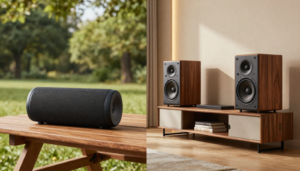
One of the first decisions buyers face when choosing an audio gadget is whether they need a portable system or a stationary speaker designed for indoor listening.
Portable Bluetooth speakers are built for convenience. These devices typically include internal batteries, waterproof protection, and compact designs that make them easy to carry between rooms or take outdoors. Many models also support features like USB-C charging, app-based EQ controls, and stereo pairing.
Stationary speakers, on the other hand, prioritize sound performance over portability. Larger enclosures allow for bigger drivers, improved bass response, and wider sound dispersion across a room. These speakers are often better suited for home listening, entertainment setups, or desktop audio systems.
Choosing between portable and stationary audio depends on how you plan to use the speaker most often. If you frequently move your speaker between locations, portability may be the most important feature. If sound quality is the top priority, a larger stationary system may deliver better overall performance.
For a deeper comparison, our portable vs home speakers guide breaks down the differences in sound quality, portability, power, and everyday use.
Modern audio gadgets include a variety of features designed to improve usability and listening flexibility. While not every feature is essential for every user, understanding these capabilities can help you choose the right speaker for your needs.
Some commonly included features include:
Bluetooth multipoint pairing
Allows the speaker to stay connected to two devices at the same time.
Stereo pairing
Some speakers allow two identical units to connect together for a wider stereo soundstage.
App-based sound customization
Companion apps may allow users to adjust equalizer settings or update firmware.
Water and dust resistance
Many portable speakers include IP ratings that indicate resistance to water exposure or dust.
USB-C charging
Modern speakers increasingly use USB-C for faster charging and compatibility with common cables.
These features can improve the overall experience, but sound quality, build quality, and reliability typically matter more than feature lists alone.
Choosing the best audio gadget starts with understanding how and where you plan to use it. Portable speakers designed for outdoor use prioritize battery life and durability, while indoor systems typically focus more on audio depth and overall fidelity.
Key factors to consider include:
Driver size and overall sound tuning
Battery life and charging speed
Durability and waterproof ratings (IP ratings)
Bluetooth range and codec support
Ease of controls and setup
Price-to-performance value
Instead of focusing only on manufacturer specifications, we evaluate clarity at higher volumes, distortion levels, build quality, and real-world usability. Many buyers end up paying for features they rarely use — our goal is to highlight audio gear that performs well in everyday listening situations.
Price doesn’t always translate directly to better performance. If you’re deciding how much to spend, our guide on whether expensive Bluetooth speakers are worth it explains what you actually gain as you move from budget to premium models.
Below you’ll find our curated Top 10 rankings organized by listening environment and budget, making it easier to compare the best options for your specific needs.
Explore our expert Top 10 rankings covering several types of modern speakers:
Each ranking focuses on a different listening scenario, helping you compare options quickly based on your environment, budget, and sound preferences.
We regularly update these rankings as new speaker models release and older products are discontinued. This ensures our recommendations remain relevant as audio technology continues to evolve.
Each product is compared against similar devices in its price category to ensure fair comparisons. This approach helps readers quickly identify strong value options without sorting through dozens of nearly identical models.
This category is reviewed and updated regularly to reflect new product launches, discontinued models, and technology improvements. As wireless audio standards evolve, we continue refining our rankings and educational guides to help readers find the best audio gadgets available in 2026 and beyond.