
Portable vs Home Speakers: Which One Is Right for You?
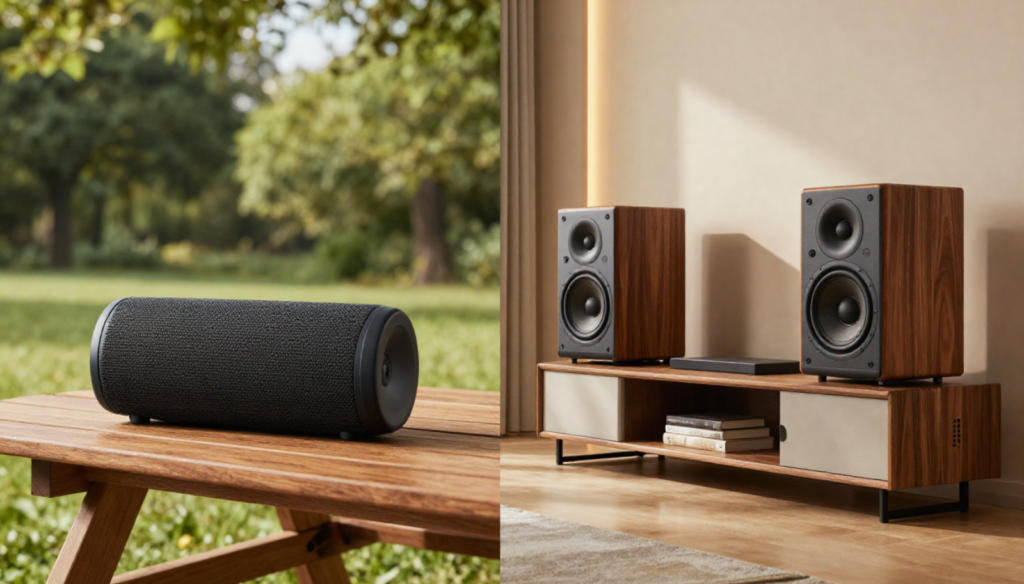
When comparing portable vs home speakers, there isn’t a single “best” option. The right choice depends on where you listen, how much sound you need, and whether portability or audio performance matters most.
Portable speakers are designed for convenience, travel, and outdoor use, while home speakers prioritize sound quality, volume, and room-filling performance. Some modern portable speakers have become surprisingly powerful, but there are still important differences between a battery-powered speaker and a dedicated home audio system.
If you’re still deciding which features matter most, our guide on how to choose the right Bluetooth speaker breaks down everything from battery life to sound quality.
Browse more speaker buying guides and audio product comparisons.
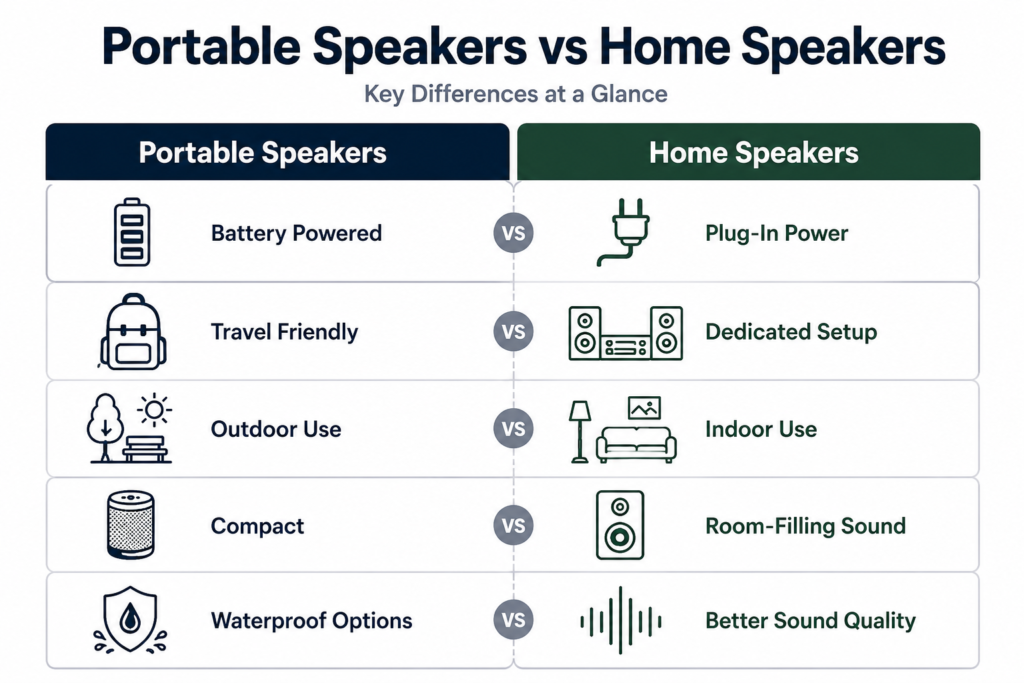
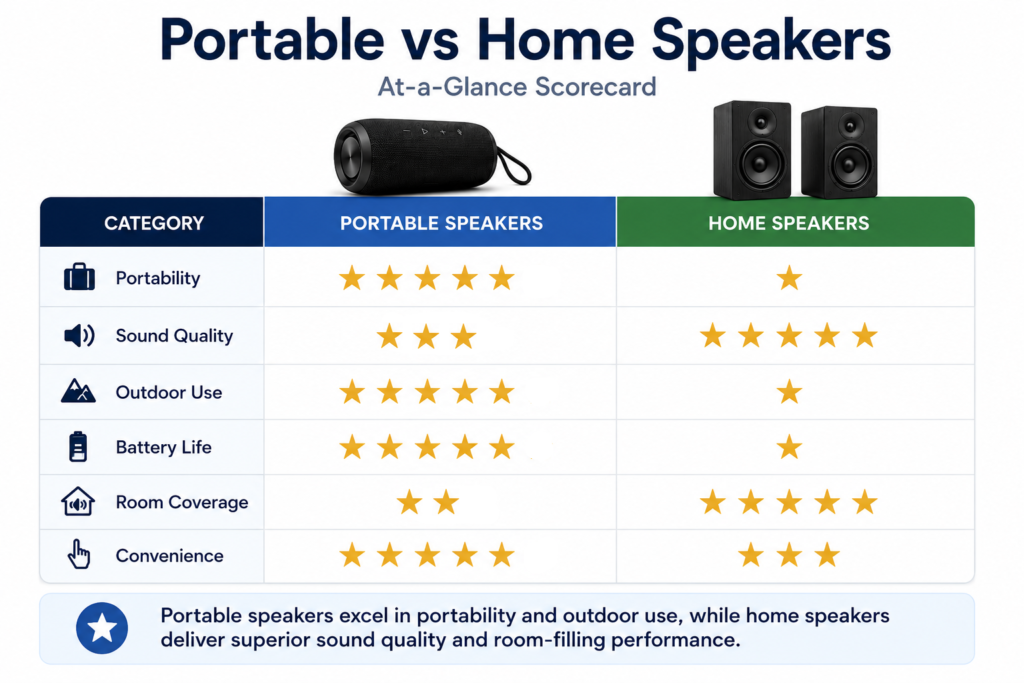
Quick Comparison: Portable vs Home Speakers
| Feature | Portable Speakers | Home Speakers |
|---|---|---|
| Sound Quality | Good to excellent | Excellent |
| Volume Output | Moderate to high | High to very high |
| Portability | Excellent | Poor |
| Power Source | Battery-powered | AC-powered |
| Indoor Use | Good | Excellent |
| Outdoor Use | Excellent | Limited |
| Bass Performance | Good | Better |
| Stereo Separation | Limited | Better |
| Smart Features | Some models | Often included |
| Price-to-Performance | Great for convenience | Better for pure audio |
Best For Portable Speakers
- Travel
- Camping
- Poolside listening
- Outdoor gatherings
- Small apartments
- Flexible room-to-room use
Best For Home Speakers
- Dedicated music listening
- TV setups
- Home offices
- Living rooms
- Audiophile listening
- Large indoor spaces
Understanding the Difference Between Portable and Home Speakers
What Is a Portable Speaker?
A portable speaker is a compact, battery-powered speaker designed to be moved easily between locations. Most portable speakers use Bluetooth connectivity and include rechargeable batteries.
Common characteristics include:
- Compact size
- Built-in battery
- Waterproof designs
- Wireless operation
- Outdoor-friendly construction
Examples include travel speakers, waterproof beach speakers, and party speakers.
What Is a Home Speaker?
A home speaker is designed primarily for indoor listening. These speakers often prioritize audio quality over portability and usually remain in a fixed location.
Common characteristics include:
- Larger speaker drivers
- AC power
- Better stereo imaging
- Higher output capability
- Wi-Fi and smart home features
Examples include bookshelf speakers, powered speakers, and wireless home audio systems.
Core Differences
The biggest difference between a portable speaker vs stationary speaker comes down to priorities:
- Portable speakers prioritize convenience.
- Home speakers prioritize performance.
A battery-powered speaker must balance size, battery life, and durability. An AC-powered speaker can focus almost entirely on sound quality.
Portable vs Home Speakers: Sound Quality
One of the most common questions is:
Do Home Speakers Sound Better Than Portable Speakers?
In most situations, yes.
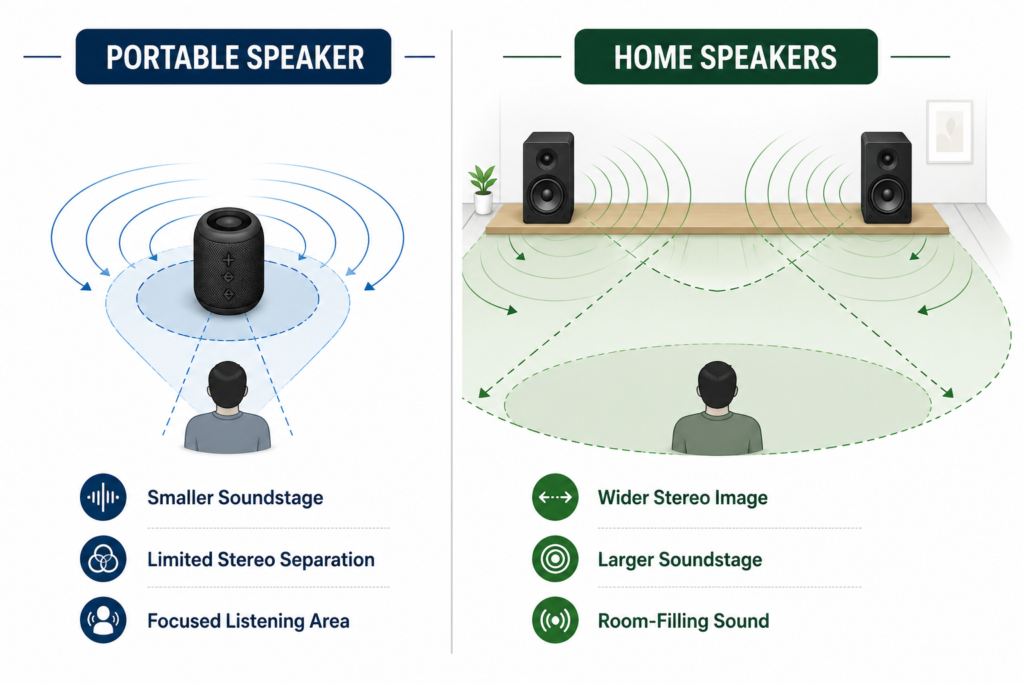
Home speaker sound quality generally exceeds portable speaker sound quality because manufacturers have more space for larger drivers, larger enclosures, and better acoustic design.
Benefits of home speakers include:
- Better stereo separation
- Deeper bass response
- More detailed mids and highs
- Larger soundstage
- Better room-filling sound
Are Portable Speakers as Good as Home Speakers?
Premium portable speakers have become extremely impressive.
Some high-end Bluetooth speakers can deliver sound quality that rivals smaller home speaker systems.
However, physics still matters.
Larger speaker cabinets allow:
- Bigger woofers
- Greater bass extension
- Higher output
- Better dynamics
Do Portable Speakers Have Enough Bass?
For most listeners, yes.
Modern portable speakers use passive radiators and DSP processing to produce surprisingly strong bass. However, a dedicated home speaker typically provides deeper and more natural low-frequency performance.
Driver size, enclosure design, and tuning matter significantly. If you’d like a deeper explanation, learn what actually affects speaker quality beyond marketing specifications.
Volume, Power, and Room Size Considerations
Which Speaker Is Louder?
Home speakers are typically louder.
Because they aren’t limited by battery life or compact size, they can produce:
- Higher volume output
- Better dynamic range
- Less distortion at high volumes
Home Speaker for Small Room
For bedrooms, offices, and apartments, a small bookshelf speaker or compact home speaker often provides the best balance of performance and practicality.
You don’t necessarily need a large system.
How Much Volume Is Needed?
General guideline:
- Small room: 70–80 dB
- Living room: 80–90 dB
- Party environment: 90–100+ dB
Portable speakers can easily handle casual listening, while home speakers are better suited for larger spaces and gatherings.
If you’re trying to determine how much speaker power you actually need, our Bluetooth speaker wattage explained guide covers wattage, RMS power, decibels, and recommended power ranges for different spaces.
Portability vs Stability: Design and Everyday Use
Portable Speaker vs Bookshelf Speaker
A portable speaker offers:
- Easy transport
- Battery operation
- Outdoor use
- Flexible placement
A bookshelf speaker offers:
- Better sound quality
- Better stereo imaging
- Greater longevity
- Higher performance per dollar
Portable Speaker vs Hi-Fi Speaker
A hi-fi speaker is designed specifically for critical listening.
If sound quality is your top priority, a hi-fi system wins.
If convenience is your priority, portability wins.
Which Is Better for Travel?
Portable speakers are the clear winner.
Many models fit in a backpack and can operate for 10–30 hours on a single charge.
Battery Life vs Plug-In Power
Portable Speaker Battery Life
Most modern portable speakers offer:
- Small models: 8–12 hours
- Mid-size models: 12–20 hours
- Large models: 20–30+ hours
Actual battery life depends on volume levels.
Do Home Speakers Need to Be Plugged In?
Most do.
Home speakers generally use wall power to support larger drivers and higher output.
Can You Use Portable Speakers While Charging?
Most modern Bluetooth speakers allow charging while playing, though some manufacturers discourage constant plug-in operation for battery longevity.
Portable vs Home Speakers: Connectivity and Features
Bluetooth Connectivity vs Wi-Fi Speakers
Portable speakers almost always rely on Bluetooth.
Home speakers often support:
- Bluetooth
- Wi-Fi
- AirPlay
- Chromecast
- Multi-room audio
Portable Speaker vs Smart Speaker
Smart speakers focus on voice assistants and home integration.
Portable speakers focus on mobility.
Some products combine both categories.
Do Home Speakers Have Wi-Fi or Voice Assistants?
Many modern home speakers include:
- Alexa
- Google Assistant
- Siri compatibility
- Smart home integration
Can You Pair Multiple Speakers?
Many modern speakers support:
- Stereo pairing
- Party modes
- Multi-room playback
Audio quality can also depend on codec support. Our guide to Bluetooth codecs explained covers SBC, AAC, aptX, and LDAC.
Indoor vs Outdoor Use Cases
Best Uses for Portable Speakers
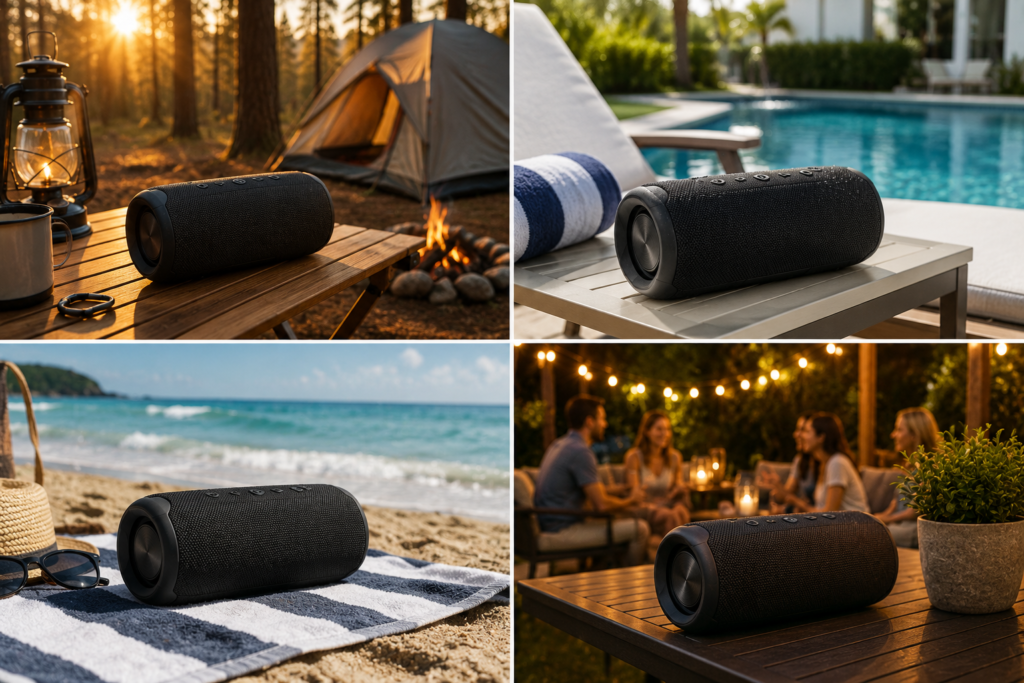
Portable speakers excel in:
- Camping
- Hiking
- Beach trips
- Pool parties
- Backyard gatherings
- Travel
Many include waterproof ratings such as:
- IPX4: Splash resistant
- IPX7: Waterproof
- IP67: Waterproof and dustproof
Best Uses for Home Speakers
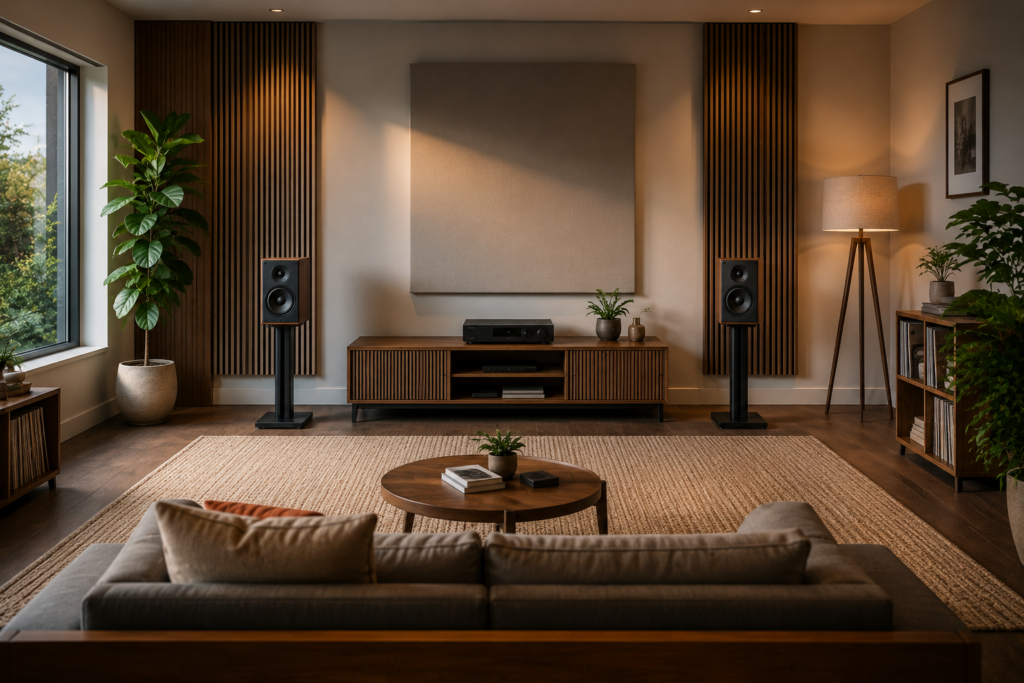
Home speakers excel in:
- Music listening
- TV entertainment
- Home offices
- Smart home systems
- Dedicated listening rooms
Portable Speakers for Home Use
Many people successfully use portable speakers indoors.
A quality portable speaker can work well for:
- Bedrooms
- Kitchens
- Apartments
- Home offices
Can Home Speakers Be Used Outside?
Yes, but they are generally not designed for weather exposure and require power outlets.
Which Is Better for Outdoor Use?
Portable speakers are the clear winner due to their battery operation and weather resistance. If that’s where you plan to do most of your listening, our Top 10 outdoor Bluetooth speakers ranking compares the best options for patios, beaches, camping, and outdoor gatherings.
Which Is Better for Small Apartments?
Portable speakers often make more sense because they save space and can move between rooms.
Durability and Build Quality
Are Portable Speakers Durable?
Many portable speakers are built specifically for rough environments.
Features often include:
- Rubberized exteriors
- Water resistance
- Shock protection
- Dust resistance
What Does IPX Rating Mean?
IP ratings indicate protection against water and dust.
Higher numbers generally indicate greater protection.
Which Type Lasts Longer?
Home speakers often last longer because:
- They avoid battery degradation
- They experience less physical abuse
- They remain indoors
A quality home speaker can easily remain functional for a decade or more.
Portable vs Home Speakers: Which Offers Better Value?
Portable Speaker Comparison by Budget
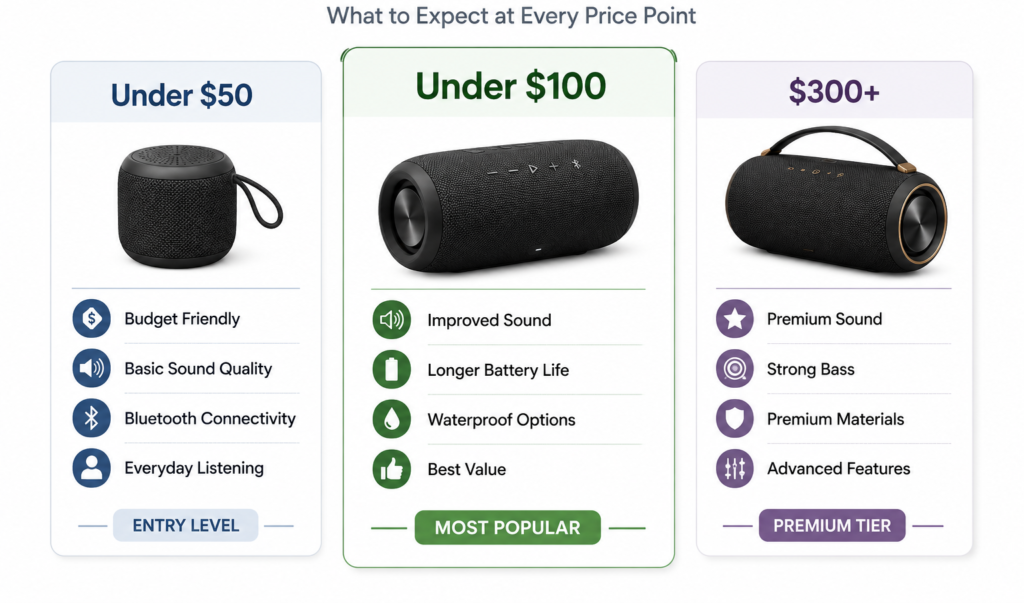
Under $50
Budget models provide:
- Basic Bluetooth connectivity
- Good portability
- Casual listening performance
See our picks for the best Bluetooth speakers under $50.
Under $100
This is often the sweet spot for portable speakers.
You’ll find:
- Better sound quality
- Longer battery life
- Waterproof designs
Check out the best Bluetooth speakers under $100.
$300+
Premium portable speakers offer:
- Better drivers
- Enhanced bass
- Premium materials
- Advanced connectivity
Some of the best high-end Bluetooth speakers can genuinely challenge smaller home systems.
Home Speaker Comparison
At similar prices, home speakers usually provide:
- Better sound quality
- More bass
- Higher volume
- Better stereo separation
Are Portable Speakers Cheaper?
Not always.
Premium portable speakers can cost as much as high-quality home speakers.
Is a Home Speaker Worth It?
If sound quality is your primary goal, absolutely.
Which Speaker Is Better for Your Needs?
Best Speaker for Home Listening
Home speakers are usually the best speaker for home listening thanks to their superior audio performance.
Best Speaker for Outdoor Use
Portable speakers dominate outdoor listening environments.
Best for Parties
It depends:
- Indoors → Home speakers
- Outdoors → Portable speakers
Best for Bass Lovers
Home speakers generally provide stronger bass response.
Best for Casual Listeners
Portable speakers offer excellent convenience and value.
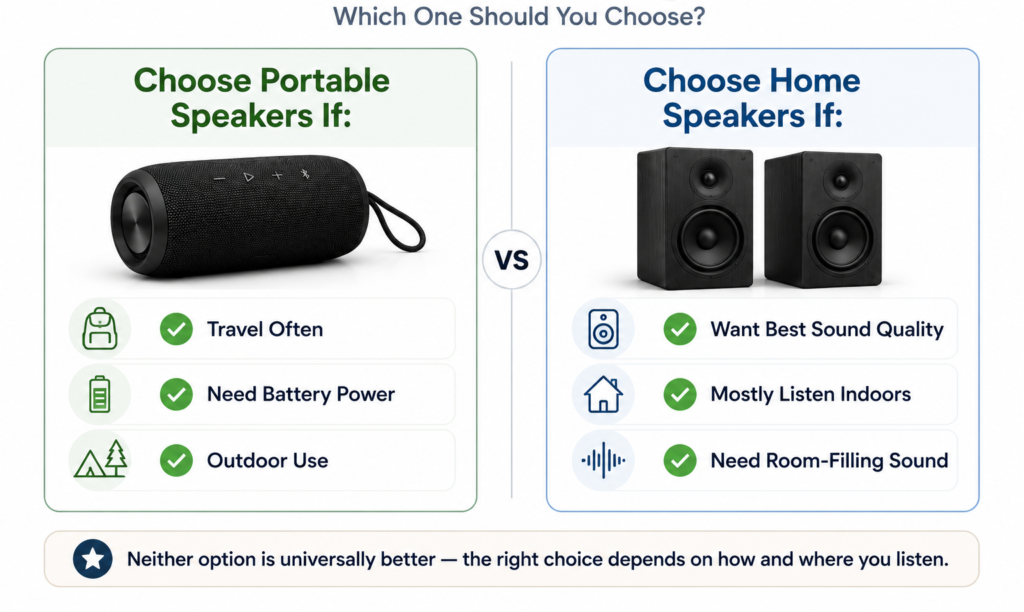
Should I Buy a Portable or Home Speaker?
Choose portable if:
- You travel often
- You listen outdoors
- You need flexibility
Choose home speakers if:
- You prioritize sound quality
- You mostly listen indoors
- You want a dedicated setup
Can One Replace the Other?
Can a Portable Speaker Replace a Home Speaker?
Sometimes.
For casual listeners in small spaces, a premium portable speaker may completely replace a traditional home speaker.
Portable Speaker vs Home Audio System
A full home audio system still provides:
- Better stereo imaging
- More powerful bass
- Greater upgrade potential
Best Portable Speaker for Home Listening
If you want one speaker that can handle both indoor and outdoor use, look for:
- Large battery capacity
- Strong bass response
- Stereo pairing support
- Premium driver design
Common Buying Mistakes to Avoid
Ignoring Room Size
Bigger isn’t always better.
Match the speaker to your listening environment.
Choosing Loudness Over Clarity
A speaker that sounds clean at moderate volume is usually more enjoyable than an extremely loud speaker with distortion.
Overpaying for Features
Not everyone needs:
- Voice assistants
- Wi-Fi connectivity
- Multi-room systems
Misunderstanding Specifications
Raw wattage rarely tells the whole story.
Sound quality depends on much more than power ratings.
How to Choose the Right Speaker
1. Identify Your Primary Use
Will you listen mostly at home or on the go?
2. Consider Room Size
Small spaces require less output.
3. Decide What Matters Most
Choose your priority:
- Bass
- Clarity
- Volume
- Portability
4. Evaluate Features
Consider:
- Bluetooth
- Wi-Fi
- Voice assistants
- Multi-room support
5. Set a Budget
The best speaker is the one that fits both your needs and your budget.
Who Should Buy a Home Speaker?
Home speakers are ideal for:
- Music enthusiasts
- TV viewers
- Dedicated listening rooms
- Home offices
If you’re looking for room-filling sound and superior audio performance, check out our picks for the best stationary home speakers.
Final Verdict: Portable vs Home Speakers
When comparing portable vs home speakers, neither option is universally better.
Choose a portable speaker if:
- You travel frequently
- You listen outdoors
- You want flexibility
- Battery power matters
Choose home speakers if:
- Sound quality is your top priority
- You listen mostly indoors
- You want the best value for audio performance
- You enjoy stereo listening
For most people, a quality portable speaker is enough. For music lovers and dedicated listeners, a home speaker system remains the superior choice.
FAQ: Portable vs Home Speakers
Are Portable Bluetooth Speakers Worth It?
Yes. Modern portable speakers offer excellent sound quality, portability, and convenience for most listeners.
Do Home Bluetooth Speakers Need Wi-Fi?
No. Many home speakers work perfectly with Bluetooth alone, though Wi-Fi can add extra features.
Can Bluetooth Speakers Replace a Home Stereo System?
For casual listening, yes. For serious music listening, a dedicated stereo system still performs better.
What Size Speaker Should I Buy?
Choose based on room size, listening distance, and volume requirements.
How Many Watts Is Good?
Watts alone don’t determine sound quality. Speaker design matters just as much.
Do Bluetooth Speakers Lose Sound Quality?
Some compression occurs with Bluetooth, but modern codecs have greatly reduced the difference for most listeners.